New Year's Decorations| Off Base Housing Yokosuka | IINO REAL ESTATE is for rental housing in Yokosuka Japan...Civilian, Military house agency
BASE BRANCH
046-820-6366
INFORMATION CENTER
046-876-6951

 RENT
RENT MEMBER
 ABOUT US
 CONTACT
 JAPANESE
New Year's Decorations
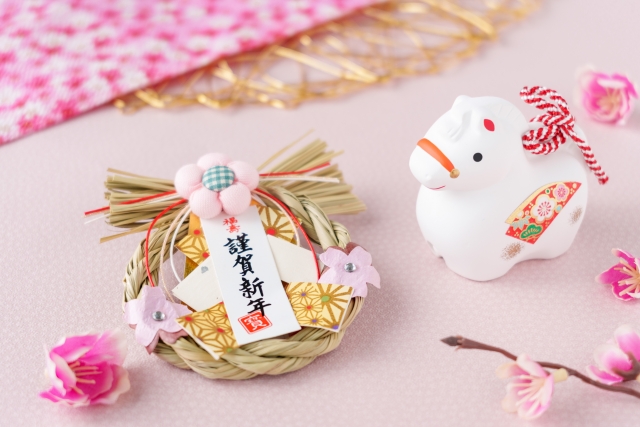
During November, as the weather slowly gets colder, many Japanese will start looking ahead towards the end-of-year celebrations and festivities. Right after Halloween is finished, local stores will set out displays of Christmas good for sale -- trees, holiday lights, ornaments, decorations, etc. Also, usually by mid-November, colorful and intricately designed traditional New Year's decorations will begin to be offered for sale. These are called: "Shime-kazari" (しめ飾り) and they are made of a sacred rope "Shime-nawa" (しめ縄) adorned with auspicious items and generally hung over the front doorway to purify the home and welcome the "Toshigami-sama" (年神さま), or New Year deity, to bring good luck and fortune. The Shime-nawa, is traditionally made of braided rice straw and is decorated with various symbolic items. Common additions include:
(1) Pine: symbolizes power and longevity; (2) Ferns: represent a happy family and hope; (3) "Dai-dai" (Japanese bitter orange): the name can be a pun for "generations," symbolizing family prosperity. (4) Lobster: represents extreme old age due to the appearance of its bent body. "Shi-de" (四手), the zigzag-shaped holy white paper streamers, are often included on the rope. Shime-kazari are made in various sizes and shapes, and while they are mostly hung on, or near, gates or doorways, the decorations are sometimes displayed on the front grills of automobiles. The period for displaying them is generally from mid-to-late December until January 7th or 15th. After the New Year, it is common practice to take the decoration to a Shinto shrine for disposal, often in a special fire ceremony to send the deity back to the heavens. Of note, another New Year's decoration is: "Kagami Mochi" (鏡餅) -- A round stack of two rice cakes, topped with a Daiーdai orange and a daikon radish. It is an offering to the Toshigami-sama and is typically eaten after the New Year in a ceremony called "Kagami Biraki". Also, there are Zodiac decorations-- Ornaments featuring the animal of the year, often made from origami or other materials. These are displayed in the home, usually in the entrance or living room. By the way, 2026 will be The Year of the Horse. The next time you visit a Japanese store or supermarket, take a look at the section selling Shime-kazari -- and maybe you can buy one for your Japanese home? Written by Goodfield


Delivering limitation property information for only members!
2-1-7, Honcho, Yokosuka city
TEL 046-820-6366
FAX 046-820-6399


